Jesal Sharma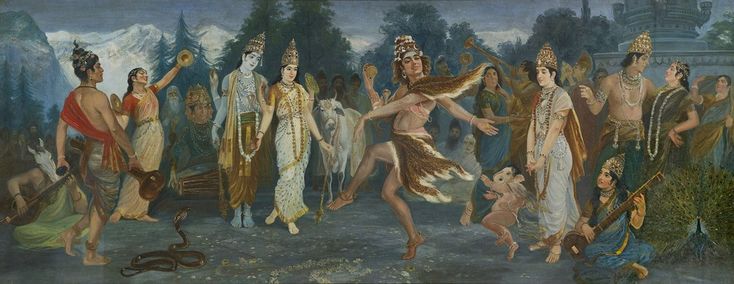
In many parts of the world, mythology is treated as something distant, belonging to museums, old books, or forgotten civilisations. In India, however, Hindu mythology continues to exist as a living force woven into everyday life. It shapes language, moral values, politics, entertainment, family structures, festivals, architecture, and even the rhythm of ordinary routines. The stories of the Ramayana, Mahabharata, and Puranas are not simply remembered; they are constantly retold, debated, adapted, and lived through modern culture.
One reason Hindu mythology remains so influential is because these stories were never separated from society in the way mythology often was in Europe after industrialisation and secularisation. The epics were historically passed down not only through texts but through oral storytelling, temple performances, village theatre, dance, music, and religious rituals. For centuries, people encountered these stories not in classrooms but in daily life. Even today, many Indians grow up hearing mythological stories from grandparents long before they formally study history or literature.
The influence of mythology is especially visible in language. Everyday speech across India contains references to mythological characters and events. The phrase “Lakshman Rekha,” taken from the Ramayana, refers to a boundary that should not be crossed. Calling someone a “Shakuni” suggests manipulation and political cunning because of the Mahabharata character known for strategy and deceit. A difficult moral conflict is often described as a “Kurukshetra,” referring to the battlefield where the Mahabharata war took place. These references are so common that many people use them instinctively, even in political discussions, films, or journalism.
Names also reveal the deep integration of mythology into identity. Millions of Indians are named after mythological figures such as Krishna, Arjun, Lakshmi, Sita, Shiv, Radha, or Karna. These names are not random choices. They often reflect qualities parents admire, such as wisdom, bravery, devotion, beauty, or resilience. In this way, mythology becomes embedded into personal identity from birth.
Festivals are another major reason Hindu mythology remains alive in modern society. Many of India’s largest celebrations are directly connected to mythological narratives. Diwali is associated with Rama’s return to Ayodhya after defeating Ravana, though in different regions it can also honour Lakshmi or Krishna. Dussehra celebrates the victory of Rama over Ravana and symbolises the triumph of good over evil. Navratri centres around the goddess Durga defeating Mahishasura, representing divine feminine power overcoming chaos. Janmashtami marks Krishna’s birth, while Ganesh Chaturthi celebrates the elephant-headed god Ganesha. These festivals are not passive commemorations. They involve rituals, performances, public decorations, food traditions, and community gatherings that actively retell mythological stories every year.
Indian performing arts are deeply tied to mythology as well. Classical dance forms such as Bharatanatyam, Kuchipudi, Odissi, Kathakali, and Mohiniyattam frequently depict scenes from Hindu epics and Puranas. In Kathakali performances from Kerala, elaborate facial expressions and costumes are used to portray mythological battles and divine characters. Bharatanatyam dancers often perform stories of Shiva, Krishna, or Devi through symbolic hand gestures and expressions. These art forms preserve mythology not as static history but as emotional, living narratives.
Temple architecture also reflects mythological influence in detailed ways. Hindu temples are often designed according to sacred cosmological principles found in ancient texts. Their walls contain carvings of gods, demons, celestial beings, mythological wars, and symbolic animals. Temples such as those in Khajuraho, Madurai, Konark, and Hampi visually narrate mythological stories through sculpture. In many regions, local myths are attached to specific temples, rivers, mountains, and forests, connecting geography itself to mythology.
Modern Indian entertainment continues this tradition. Mythological television serials have had enormous cultural impact. The televised Ramayana and Mahabharata during the 1980s became national phenomena, with streets reportedly emptying during broadcasts because families gathered to watch together. Even today, mythology inspires films, animated series, comics like Amar Chitra Katha, web series, and novels. Modern authors reinterpret characters such as Karna, Draupadi, and Ravana from psychological or political perspectives, showing how mythology evolves with changing social values.
Politics in India also frequently draws upon mythology. Political speeches, public symbolism, and national imagery often reference mythological figures and ideals. Leaders may compare themselves or opponents to characters from epics, while religious symbolism rooted in mythology can shape public discourse and identity politics. Mythology therefore functions not only culturally but politically.
Perhaps the most important reason Hindu mythology still shapes modern life is because it deals with deeply human questions rather than simple moral lessons. The Mahabharata, for example, is not a story divided neatly into good and evil. Characters like Karna, Bhishma, and Draupadi are morally complex, which is why people still debate them today. The epics explore duty versus desire, loyalty versus justice, power versus morality, and personal emotion versus social responsibility. These conflicts remain relevant in modern life, making the stories feel timeless rather than ancient.
At the same time, mythology in India is not completely fixed or uniform. Different regions tell stories differently. Ravana, often portrayed as the villain in northern India, is respected in some southern traditions for his scholarship and devotion to Shiva. Local versions of the Ramayana exist in Tamil, Bengali, Assamese, Thai, Indonesian, and countless other forms. This flexibility allows mythology to remain adaptable across generations and cultures.
Hindu mythology still shapes modern life because it exists not only in temples or books but in speech, art, politics, family traditions, and public imagination. It continues to evolve while remaining deeply connected to the past. In India, mythology is not merely remembered. It is constantly lived, reinterpreted, and carried forward into the present.