Jesal Sharma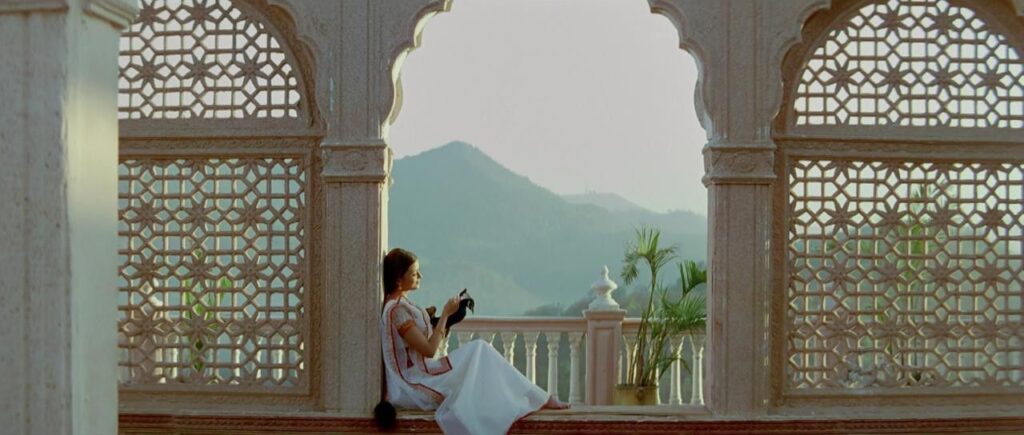
Guzman, Mirna. “Aish 💫: Film Stills, Indian Aesthetic, Film Aesthetic.” Pinterest, 13 Sept. 2023, www.pinterest.com/pin/aish–336081190957920356/.
Movie- Hum Dil De Chuke Sanam
If you have ever watched an Indian film, you will know it is never just a story. It is a celebration. A wedding, a heartbreak, a victory, a dream. Somewhere in the middle of it all, there is always a song. The hero might be chasing a train, the heroine might be watching the rain, and suddenly the world becomes a stage. The dialogue fades, the music rises, and life itself begins to dance.
For many international viewers, this may seem curious. Why sing when you can speak? Why dance when you can act? But in India, emotion has always had rhythm, and stories have always found their voice in melody.
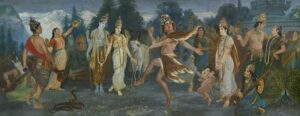
To understand this, we must look far back, long before the age of film. Over two thousand years ago, a Sanskrit text known as the Natya Shastra laid the foundation for Indian performing arts. According to it, all art forms- dance, drama, and music- are meant to express rasa, the essence of emotion. Every feeling has a rhythm, a tone, and a movement. When cinema was born in India, it naturally inherited this ancient philosophy.
The very first Indian sound film, Alam Ara, released in 1931, featured seven songs. The audiences loved it. The songs made the story breathe; they were not interruptions, but extensions of emotion. When lovers could not say how they felt, they sang. When grief was too heavy for words, melodies carried it instead.
In India, songs are not an addition to life. They are life. From the morning aarti echoing in temples to the drumbeats of weddings and the lullabies sung by mothers, music has always been our companion. It reflects how we celebrate, mourn, hope, and remember. Indian cinema simply mirrors this heartbeat.
There is also something deeply communal about film songs. They bring people together across generations and languages. A grandmother hums an old Lata Mangeshkar tune while her granddaughter dances to a modern remix, and somehow, they both belong to the same moment. In a country as vast and diverse as India, songs have long been the threads that bind people together.
Over the decades, film music has evolved beautifully. The golden era of singers like Kishore Kumar and Lata Mangeshkar gave us voices full of emotion and grace. Later came A. R. Rahman, who blended Indian ragas with global sounds, showing the world that Bollywood music could be both traditional and modern. Even today, whether the story takes place in a quiet village or a futuristic city, Indian films still sing.
Indian cinema sings because India sings. It is the rhythm of our storytelling, the poetry of our emotions, and the collective memory of a nation that never stopped dancing. Each song is a piece of our soul sometimes joyful, sometimes sorrowful, but always alive.
So, the next time you see an Indian movie and see a hero singing under the stars, do not ask why. Just listen. Somewhere in that melody, an ancient story is being told once again one that has travelled through centuries, carried by the music of the heart.