Angela Wang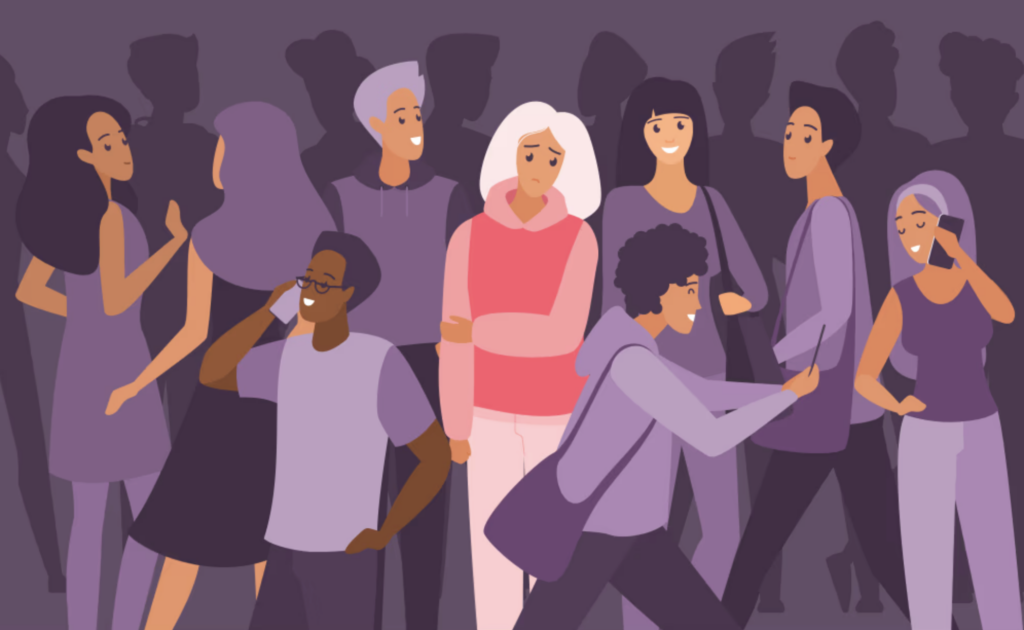
As a teenager sits at a party, friends laugh around them, someone shows a meme, someone passes snacks. And yet, that teenager feels completely alone.
It doesn’t seem to make sense. Loneliness is supposed to happen in isolation, when no one texts back, when lunch is eaten alone, when a Saturday night is just a bed and a lonely feeling.
But here is the truth. Loneliness is not about how many people surround a person; it is about the gap between the connection they want and the connection they are actually getting.
Why does it happen? The answer is that people outgrow each other. Friends knew the old version of a person. But that person has changed. Sitting in a room with people who no longer recognizes each other can feel lonelier than sitting in an empty room.
Social masks go up. One friend is always the funny one, so they keep joking even when sad. Another is the strong one, so they never show weakness. When someone performs a version of themselves, no one can truly reach them.
Conversations stay shallow. Memes, gossip, homework complaints. If every hangout remains on the surface, a person starts to feel like a ghost; present at the moment but empty in every other way.
This kind of loneliness is not the same as sadness. It feels more like homesickness, except the person is already home. Or like hunger at a dinner table where none of the food looks edible.
What can help? First, it is important to know that it is not a personal failure. Friendships change and people grow at different speeds. Wanting deeper connection is not being “too much”.
Second, no one has to fix their feelings in the middle of a party. Sometimes a person just survives the hangout and goes home, and that is perfectly fine.
But over time, an honest question helps: Do I want to be saved from loneliness by these people? Or do I need different people?
The realization that the room might not be right is painful. But it is also useful information about themselves.
Image Credit: