Polly Pui
This month, Grade 9 Accelerated English students in Mr. Mikey’s class took part in the New York Times “Ask a Journalist” Challenge — and in the process, they explored one of the biggest topics shaping our world today: artificial intelligence.
A Week of Learning and Debate
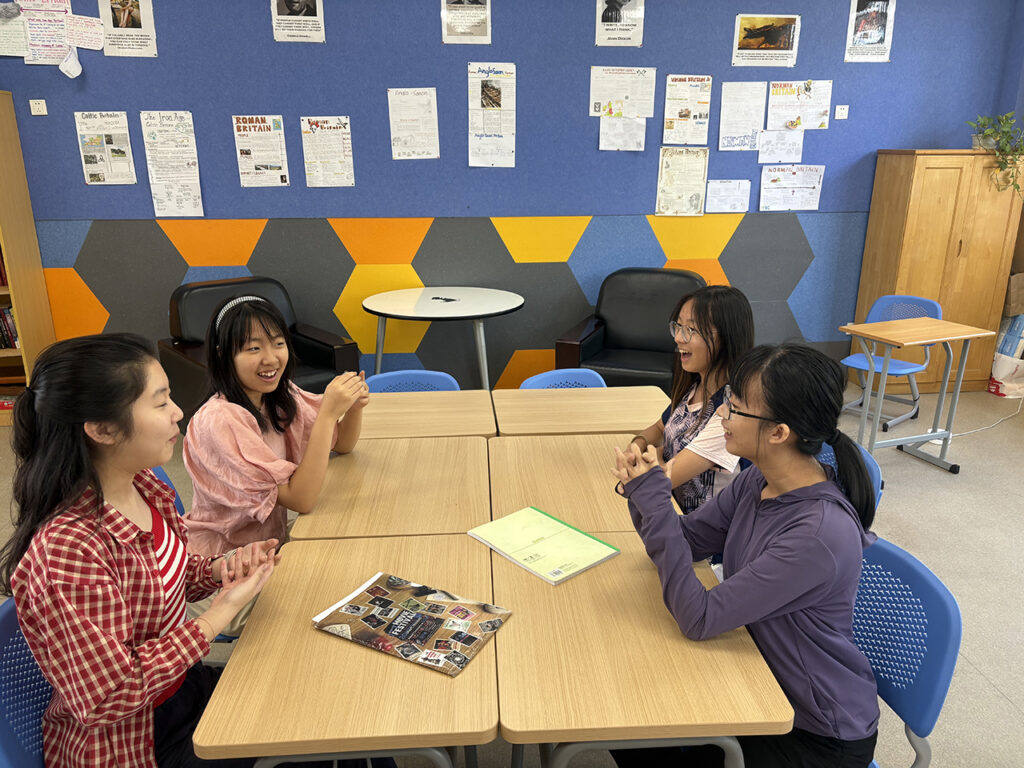
Before joining the NYT challenge, students spent a week critically examining their own use of A.I. in schoolwork. The class discussed questions like: How can A.I. improve our learning? When does it cross the line into plagiarism or cheating?
To explore these questions further, students held a Socratic discussion, debating possible school policies and considering both the benefits and risks of A.I. in education. It was a chance for everyone to share opinions, challenge each other’s ideas, and practice the kind of respectful dialogue that’s essential in tackling complex global issues.
Reading Kashmir Hill
As part of the challenge, the class read three really interesting and thought-provoking articles by award-winning New York Times journalist Kashmir Hill:
• One about how she let an A.I. chatbot make all of her decisions for a week.
• One about a man who fell down an A.I. “rabbit hole” when his chatbot convinced him he was a math genius.
• And one about college students who are frustrated with professors relying too heavily on A.I. to prepare lectures.
These articles sparked plenty of reactions, from curiosity to concern. Students reflected on the responsible use of A.I. and also on the dangers of using A.I. as a “chat friend” instead of a real human connection.
Joining the Global Conversation
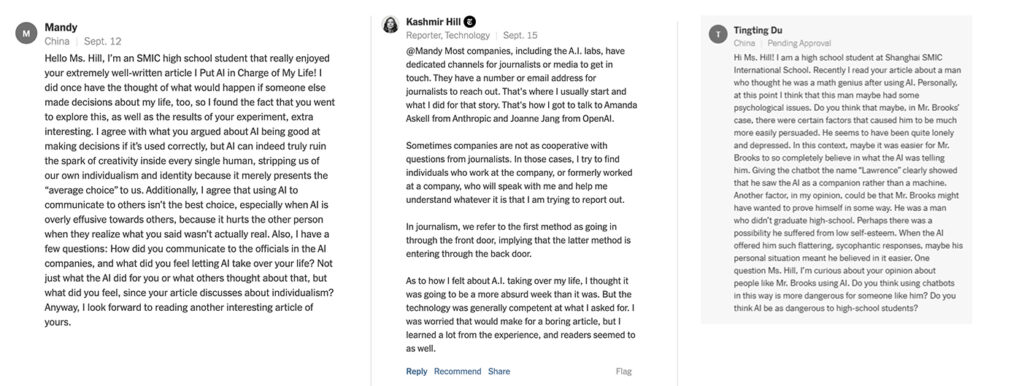
Five SMIC students posted their reflections on the New York Times website, adding their voices to a global conversation about technology, education, and society. The highlight came when Mandy Shi received a thoughtful reply from Kashmir Hill herself. Mandy described the experience as “a great thrill to hear back from such a prestigious journalist.”
Why It Matters
This activity wasn’t just about A.I. — it was about practicing critical thinking, inquiry, and global citizenship. Students saw first-hand how their voices can contribute to meaningful conversations happening far beyond the classroom.
As one student commented afterward, “I learned a lot about how to use A.I. responsibly, and also about how easy it is to let it take over if we’re not careful.” At Shanghai SMIC International School, we’re proud of our students for stepping into global debates with curiosity and responsibility. Their work shows the power of education to connect local classrooms to worldwide discussions.