Wen Jue Niew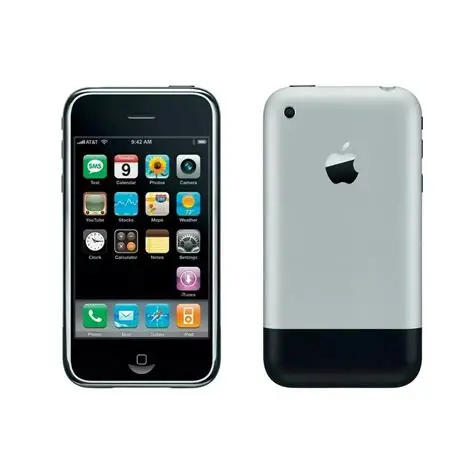
Why was the first iPhone so significant?
Steve Jobs unveiled the first ever iPhone on January 9th, 2010, stating that it was a day he had been “looking foward to for two and a half years” on the stage at Macworld. A combination of an iPod, a “revolutionary mobile phone”, and a “breakthrough internet communicator”, the original iPhone consisted of a 3.5-inch LCD, 320×480 resolution display, a 412 MHz ARM11 processor, 128 MB of RAM, and had up to 8 GB of storage.
With the iPhone, Apple redefined the phone industry. The iPhone introduced “an entirely new user interface based on a large multi-touch display and pioneering new software, letting users control iPhone with just their fingers. iPhone also ushers in an era of software power and sophistication never before seen in a mobile device, which completely redefines what users can do on their mobile phones” (Chen). The reduction of a physical keyboard, which appears on most flagship phones at the time, allows for a minimalist full-screened device, and, with Apple “invented a new technology called multi-touch, which is phenomenal, it works like magic. You don’t need a stylus, it’s far more accurate than any touch display that’s ever been shipped. It ignores unintended touches, it’s super smart, you can do multi-finger gestures on it, and boy have we patented it…”
“