Maximus Ko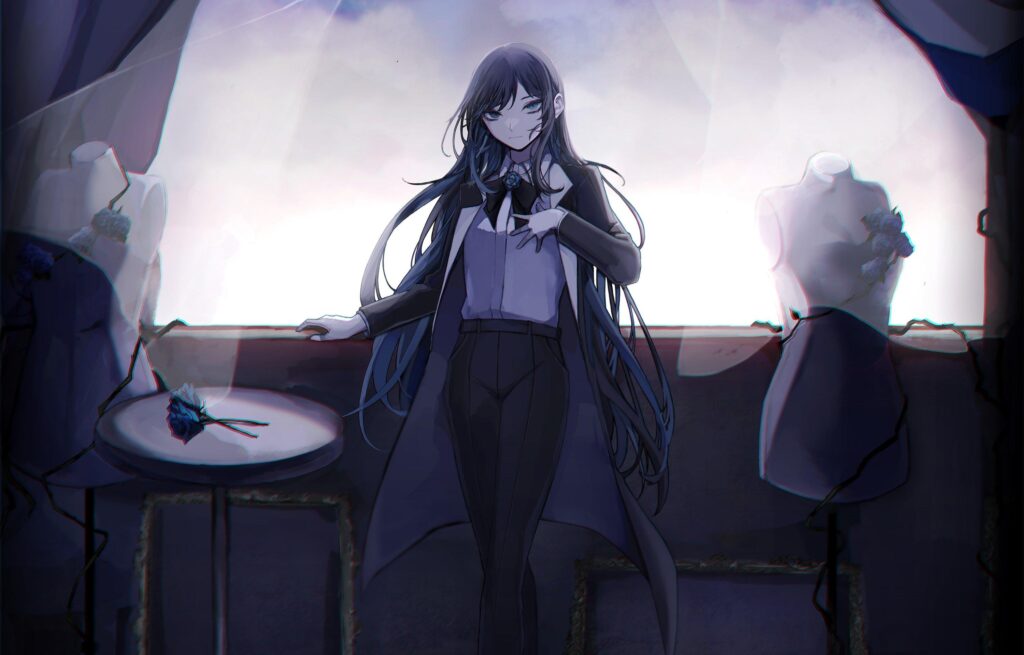
In the bustling landscape of modern J-Pop, where visual appeal often shares the spotlight with musical talent, one artist has redefined stardom by letting her voice alone take center stage. Ado, born on October 24, 2002, in Tokyo, Japan, is a phenomenon—a singer whose anonymity has become as iconic as her powerful vocals, and whose rise from a bedroom cover artist to a global music sensation is a testament to the transformative power of raw talent. At just 23 years old, she has shattered records, bridged cultural gaps, and proven that in an era of overexposure, the voice can still be the most compelling storyteller. Ado’s musical journey began not in a professional studio, but in the quiet of her own home, inspired by the digital culture of Japan’s Niconico platform. In 2014, when Niconico became accessible on the Nintendo 3DS, the 12-year-old Ado stumbled upon the world of “utaite”—internet cover singers who perform without showing their faces. Captivated by the idea that talent could shine independently of appearance, she began honing her craft, eventually uploading her first cover, a rendition of Kuwagata-P’s “Kimi no Taion,” to Niconico on January 10, 2017. To perfect her sound, she even soundproofed her closet with materials bought online, turning that small space into her first recording studio—a detail immortalized in the cover art of her later “Utattemita” album. By 2019, Ado’s growing talent caught the attention of other artists. She featured on Kujira’s digital single “Kinmokusei” in December 2019 and later lent her vocals to Jon-Yakitory’s “Shika Banē ze” in March 2020. That same year, she contributed two tracks to Pony Canyon’s compilation album “Palette 4,” marking her first steps toward mainstream recognition. These early collaborations showcased her versatile voice—capable of shifting from gritty, emotional growls to soft, melodic tones—and laid the groundwork for her explosive debut. On October 23, 2020, just one day before her 18th birthday, Ado made her major-label debut under Universal Music Japan with the digital single “Usseewa” (“Shut Up”). Written and produced by Vocaloid producer Syudou, the song became an instant cultural phenomenon, resonating with Japanese youth through its unapologetic lyrics about frustration, rebellion, and self-empowerment. It quickly topped the Billboard Japan Hot 100, Oricon Digital Singles Chart, and Oricon Streaming Chart, and reached 100 million plays on Billboard Japan in just 17 weeks—making Ado the youngest solo artist to achieve that milestone, and securing her place in history as the sixth-fastest artist to hit the mark. “Usseewa” was more than a hit; it was a movement. Its music video surpassed 100 million views on YouTube by March 2021, and the song went on to win the U-Can New Word Award in 2021, cementing its status as a defining phrase of the year. For Ado, the single was a declaration: her voice could command attention without the need for a public face. She continued to maintain her anonymity, performing as a silhouette or through illustrated avatars, a choice that was never a gimmick, but a deliberate commitment to keeping the focus on her art. This dedication only amplified her allure, as fans around the world were drawn not to her image, but to the raw emotion and technical prowess in every note she sang. Following the success of “Usseewa,” Ado continued to build her legacy with a string of hit singles and albums. Her debut studio album, “Kyougen,” released in January 2022, debuted at number one on the Oricon Albums Chart and was certified double platinum, featuring collaborations with some of Japan’s top producers like DECO*27 and GigaP. The album showcased her range, from the upbeat, anthemic “Odo” to the hauntingly beautiful ballad “Yoru no Pierrot,” proving that her talent was far from a one-hit wonder. In 2023, she further expanded her reach by lending her voice to the main character Uta in the anime film “One Piece Film: Red,” where she performed all of Uta’s songs, including the chart-topping “New Genesis” and “Tot Musica.” The film’s soundtrack became a global hit, introducing Ado to audiences beyond Japan and solidifying her status as an international star. Building on this global momentum, Ado embarked on her world tours, bringing her electrifying live performances to fans across continents. Her first world tour, “Wish” powered by Crunchyroll, was a sold-out success, laying the groundwork for her second and more extensive world tour, “Hibana” (meaning “spark” in Japanese), held from April to August 2025. This 34-show tour spanned Asia, Europe, North America, and Latin America, with major stops including Saitama in Japan, Bangkok, Taipei, Seoul, London, Berlin, Los Angeles, Chicago, Mexico City, and Sydney, among others. Many of these shows sold out quickly, a testament to her global popularity, with venues ranging from iconic arenas like Tokyo’s Saitama Super Arena and London’s The O2 to major stadiums across four continents. Her tour setlist featured 21 songs, including fan favorites like “Usseewa,” “Odo,” “New Genesis,” and “Tot Musica,” along with deep cuts and even a cover of Sia’s “Chandelier,” lasting about 75 minutes and showcasing her unmatched vocal range and stage presence. Even as her fame grew, Ado remained true to her roots, continuing to upload covers to Niconico and engaging with her fanbase in the same humble, authentic way she did when she first started. Her anonymity, once a unique quirk, has become a symbol of her artistry—proof that music, at its core, is about connection, not image. Today, Ado stands as one of the most influential artists in modern J-Pop, with billions of streams worldwide and a dedicated fanbase that spans every corner of the globe. She has redefined what it means to be a star in the digital age, showing that true talent needs no face to shine. As she continues to evolve and experiment with her sound, one thing remains certain: Ado’s voice will continue to captivate, inspire, and leave an indelible mark on the world of music for years to come.